
Starbucks is one of the most-studied brands of the last fifty years for a reason: it changed how America drinks coffee, how shopping malls anchor their food courts, and how loyalty programs convert habitual purchases into financial assets on a balance sheet. In this study we'll trace the moves that turned a single Seattle store into a $100 billion company.
Origin story
Starbucks opened in 1971 as a single bean-roasting shop at Pike Place Market, Seattle. It sold ground coffee, not coffee drinks. The pivot to becoming a coffeehouse came in 1983 when Howard Schultz returned from Italy convinced that what America was missing was the espresso bar. After acquiring the brand in 1987, Schultz expanded with a relentless real-estate-first strategy.
Business model
Starbucks operates a hybrid model that's frequently misunderstood. Globally, ~50% of stores are company-operated and ~50% are licensed — but it does not run a traditional franchise system in the McDonald's sense.
- Company-operated stores sit on premium streets and capture the full margin. They control the brand experience.
- Licensed stores live inside airports, supermarkets, and hotels — places Starbucks itself can't easily lease. Royalties are smaller but capital is light.
- CPG channel — packaged coffee and bottled drinks distributed by Nestlé under a $7B 2018 licensing deal. High margin, zero stores.
The "third place" strategy
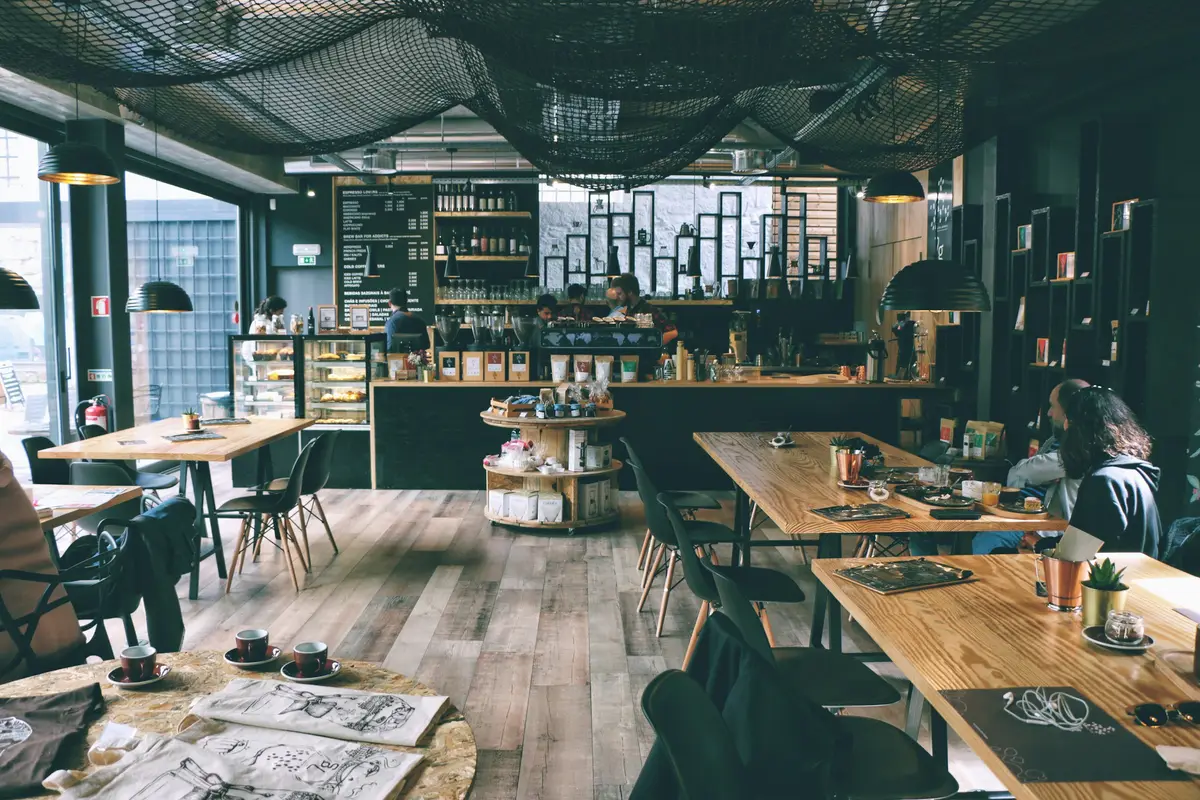
Schultz's most quoted idea is the "third place" — a space that isn't home (the first place) or work (the second). The store design follows from this brief: comfortable seating, free Wi-Fi, no time pressure, espresso-bar acoustics. Every choice from chair height to music volume is downstream of the third-place positioning.
Rewards & the lock-in flywheel
The Starbucks Rewards program is the quietest financial-services innovation of the last decade. Customers preload money onto a Starbucks balance to earn faster — at any given quarter Starbucks is sitting on $1.6B+ of customer money. This balance is effectively an interest-free loan, larger than the deposit base of many community banks.
The flywheel works like this:
- Customer preloads ₹500 to earn 2× stars on next visit.
- Starbucks holds the cash — non-interest-bearing, in foreign currencies that strengthen.
- Customer is now psychologically locked in: spending Starbucks-money "doesn't feel" like spending real money.
- Breakage on unredeemed balances books straight to revenue.
Lessons for builders
Key takeaways
- 01Hybrid models beat pure ones: own where the margin is, licence where the access is, partner where the regulation is.
- 02Sell the experience, not the SKU. Coffee is a commodity; the third place isn't.
- 03Pre-paid loyalty is a balance-sheet weapon — it converts habit into working capital.
- 04Defend brand consistency obsessively in company-owned stores; let licensees flex on the edges.
- 05A $100B brand is built from a clear customer brief — Schultz wrote one in 1983 and never deviated.